Sunday, 10 April 2016

What Media Says About Us


     When it comes to media and television, everybody has guilty pleasures. Things that you watch that you know aren't necessarily "good" or "popular" but you still enjoy it anyway. Even I'm guilty of it-especially so. One of these, for myself, for the longest time, has been the internet commentary show Tosh.0.

     Tosh.0 is one of those shows that can be incredibly indicative of North Americans as both a media producing and media consuming society. The show is explicit and unforgiving and can be cruel, violent, and disgusting when it wants to be (Which is to say, always...). It also simultaneously, at times, displays a degree of genuine truth in it's shock humor and biting vulgarity. 

     As for what it says about us, it is very plain in displaying what we enjoy as a media reliant society. While many people may put on a kind face and pretend to be averse to humor relating to thing like racism, rape, disability or gore, Tosh.0 deals it in spades and yet still maintained a healthy fanbase in mainstream media. This is because, as much we may deny or ignore it, we are a society that enjoys laughing at the pain of others, taboo topics, and things you probably shouldn't talk about in a professional setting. 

Comedy at its purest

     For example, Daniel Tosh's show consists mostly of himself riffing off, commenting on, and insulting viral videos on the internet. Most of the videos revolve around people getting into fights, or accidents, by their own fault or not, but all usually end in what the audience can assume is at least mild injury. His jokes are always insulting, often citing the person's stupidity for doing those things in the first place. It makes up a large section of the show and is never anywhere near nice or SFW and yet even I often find it hard not to laugh.

    You can see for yourself here; beware of pop-up ads, of course.   (http://putlocker.is/watch-tosh0-tvshow-season-4-episode-7-online-free-putlocker.html ).

     Not even Tosh or the others who work on the show are safe from pain and humiliation. Regularly, the show's staff and often Tosh himself are put through ridiculous situations and inconveniences for the sake of a joke, whether through Tosh's pranks or ridiculous stunts. He himself even takes a bowling ball rolled down a water-slide to the crotch for the sake of a bit, with a massive bruise to show for it. Normally, some might take this kind of treatment and behavior as something to be concerned about, but here, the audience loves it and no joke is too far.


     In the end, our enjoyment of these kinds of things beg one important question: Does it make us bad people to enjoy this kind entertainment? Many people debate this, some believing that the enjoyment of this kind of media makes us bad people. 

     I for one dispute this; while laughing at and making fun of things like this may not make us good people, I don't believe it makes us bad necessarily. In fact, I believe it can be healthy not just individually to laugh at these kinds of things and make the kind of jokes that Daniel Tosh and those like him make. If difficult or taboo things like this are avoided and ignored it becomes harder and harder to talk about them when it becomes necessary. If we can't as a society or individuals learn to discuss and even laugh at the hard things then we build barriers between us and the important issues, whether it's rape or how funny we find someone lighting themselves on fire through their own stupidity. In the end, our choices of entertainment within the media may shine a more negative light on us as people, but I believe it's a necessary one none the less.

Laugh through the pain. It's better than crying or talking about the weather

Wednesday, 21 January 2015

V for Vendetta: From Page to Screen

   
     In 1982, famous comic book writer and possible wizard Alan Moore and artist David Lloyd began releasing the story V for Vendetta in issues until 1989. The story centered on a post-apocalyptic, dystopian 1990's Britain where a fascist political party named Norsefire is governing with a tight grip on everything and everyone is always being watched and listened to. Soon, this society begins to fall apart when a mysterious figure known only as V begins to knock the legs out from under the government through various daring and dangerous acts. The comic received fantastic reviews and became a cult classic for comic book lovers. In 2005, a film version of the story was released starring Natalie Portman, John Hurt and Hugo Weaving as the titular character to mixed but generally positive reviews. Surprisingly to some, and not so surprisingly to others, writer Alan Moore distanced himself from the film and had his name removed from anything associating him to the film without viewing it and before it had even been released. In many ways, Moore's distancing himself from the film is understandable. While the film wasn't actually bad there were many changes done to the story over the course of the transition from book to film that loyal fans of the comic may not be so keen on.


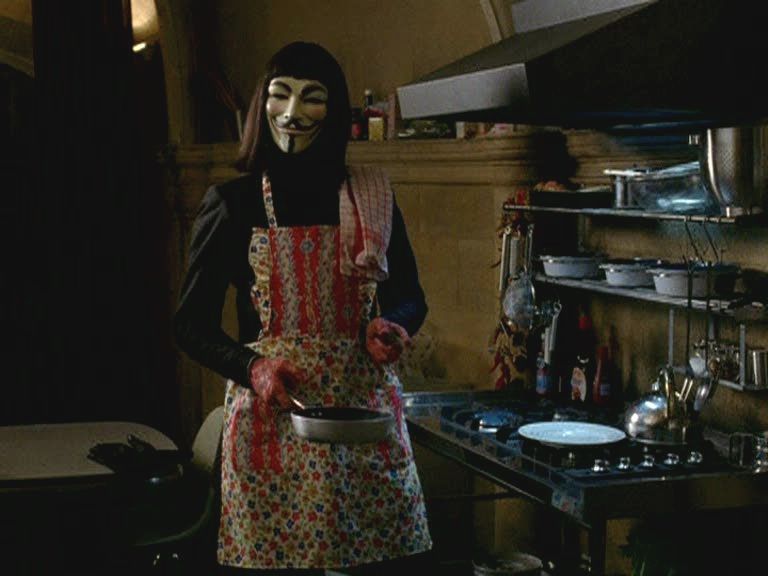
     One of the most significant and noticeable differences between the two works is the portrayal of the two main characters; V and his protege Evey Hammond. In the original comic, V, for the most part is portrayed as something almost not human, he's a mysterious figure with little known about his past and no real name or proper face to attribute to him. He's shown to be, for the most part, ruthless, emotionless, intelligent and incredibly cold and calculated. He makes himself out to be something more than just simply human, the living embodiment of an idea, in fact, and rarely shows true emotion accept for a few occasions, most of which are when he lets his rage show through. V from the film, however, is portrayed as considerably more human (and slightly less crazy). He still retains his mysterious persona and nothing more is really given of his past, nor is his face shown either, but he is seen showing emotion far more often and doing things that would seem out of character for his comic book counter part, such as cooking Evey breakfast (in a floral apron no less). 


The face of a revolution.
     
     Evey, on the other hand, is a naive sixteen year old at the beginning of the comic. She begins as a poorly educated girl prepared to sell herself on the street to get by and never had any inclination of acting out against the government before meeting V. By the end of the story she has become a completely different woman who is not only much smarter and more confident but ready to take over for V upon his death. The Wachowski Brothers' version of Evey, on the other hand, is a twenty-something year old woman who is rather well educated to begin with, even working at the government television station and is the daughter of political activists. She still assists V in his mission to take down Norsefire and is taught many things by V, but at the end of the film does not take up V's mantle after he dies like she does in the comic book. She instead gives V his viking funeral via Subway train full of explosives and goes about her way.

     The differences between the two characters and their film counter parts is significant at times, but for the most part, not without reason. V is the main focus of the story, and when making a film that will be enjoyable for not only fans of the comic book but people who have never experienced the story before, having to watch a character on screen for two hours who's little more than a talking mannequin in the way of emotional connection isn't going to be very engaging for an audience that isn't already involved in the story. As for Evey, she's an important character for the audience because she's their emotional connection to V and the story. In the comic, the writers had seven years worth of issues to flesh out her personality and have her change from a naive teenager to an intelligent revolutionary at the pace they wished. Film isn't often afforded that kind of luxury. Developing Evey's character like it was in the comic would have taken longer and left less room for other aspects of the story that needed to be fit in. Plus, Portraying Evey as a more capable woman, already somewhat involved in the resistance effort is easier for an audience to get behind then a teenager who has no other choice but to sell her body to survive and has never thought about resisting against her repressive government. 

     Finally, one of the most drastic changes to the story would have to have been the portrayal of Norsestar and it's leader, Adam Susan, or Adam Sutler, as he's known as in the film. In both the film and the book Norsestar is a fascist government party that takes over after democratic society crumbles and immediately begins rounding up anyone who is labelled an "undesirable", in other words, anyone who isn't white, heterosexual and christian. They both consist of several parts, each serving a different use and named after a body part, all of which are controlled by the head of the party Adam Susan/Sutler. In the book, however, Norsestar is a far more gritty organization, with several members scheming to undermine others in the party to replace Susan as head of the party. Susan himself is a socially inept man who rules the party, and by extension, the country and gives orders from his office, mostly occupied by a large super computer called Fate. He is an extreme fascist and believes civil liberties are threats to a secure society and unnecessary. Susan tries desperately to stop V from destroying his government, but only through the use of the many departments of his government, rarely leaving his office. He has a disdain for most human contact deciding that if he cannot be loved he can at least be feared and respected. It's revealed that the closest he can get to genuine human emotion is with his computer Fate, who he is in love with, referring to it as his god and at times believing they are the only two real things in existence. V eventually uses this against him When he reveals that he has had access to Fate and has been using it to manipulate Norsestar and Susan by making the computer express love, controlling and manipulating the entire party. This only serves to drive Susan more insane than he already was.

     The film's version of Norsefire is much more extreme, resembling many famous totalitarian governments both real and fictional. This version of Norsefire takes over after a biological weapon kills millions, rather than a nuclear war like the comics. In the film, Norsefire's reign feels much like the nazi's, but some of their tactics are similar to US methods, such as dragging people away with a black bag over their head and making them disappear. Overall, this version of Norsefire is much more vicious and overtly evil, poisoning and killing thousands of children to help them rise to power. Adam Sutler is also different, as well. He still lives in seclusion, appearing mostly on screens and giving his lieutenants orders from his underground bunker, but he seems less disdainful of human contact than his comic counter-part even rather charismatic when he speaks at rallies in front of his people. The subplot of Sutler being in love with his computer was also cut from the film and isn't addressed or referenced. Overall, in makes for a much more drastic and easily hated villainous government.

     While these are also large and significant changes to the story, they weren't done out of disregard for the original. Norsefire is made to seem more violent and drastic to fit better with modern times and gives the audience a big old villain to hate along with the rest of the cast. Making the party like many classic fictional and non-fictional regimes also helps establish to the audience the kind or rule they have over the people and the state of the country with minimal effort. As for the changes to Adam Susan, they were necessary because in the comic, Susan's hatred of people in general but horribly disturbed love for his computer humanized him and the party. In the film they wanted Norsefire to seem like this big, powerful, intimidating regime and the original character wouldn't have fit this image so they changed him to a more powerful and charismatic dictator type, similar to that of Hitler.

     There are plenty of big changes between the movie and the comic for V for Vendetta, but there are also many similarities. Most of the changes made were for the benefit of the audience to make the story better fit for a wider variety of people. It ends up giving the movie a significantly different feel to the comic, but it still contains many of the same messages as the original. Overall, the move isn't really bad, it's good, even, there are just changes that needed to be made for the benefit of the wider audience in the transition to film and some aspects of the original just got lost in that translation. In the end, no film adaptation will ever be perfect, there will always be changes that need to be or just will be made from one medium to another, but it's not always because the creator just felt like changing things, sometimes it's for good reason.


Media Mini Reviews

Review #1: Psycho


     What better a way to start this off than with a classic. Psycho is one of those movies that you hear about long before you ever see it. The movie is older than my parents and has managed to survive and still be culturally relevant to this day; and for good reason. Psycho was one of those movies I always meant to watch but never did, but now that I have I'm glad I watched it. For a 50 year old film it manages to be entertaining and even incredibly creepy at times. The story was wonderfully refreshing compared to today's formulaic horror stories and, had I not already known the ending going in, I'm sure I would have been on edge the whole time waiting to see what would happen next. It's a movie that's full of interesting turns and a few really surprising moments all done without the in-your-face gore and pop-scares that usually come with today's horror films. Norman Bates is a great villain, with more character development than most horror villains and monsters, with Anthony Perkins playing the perfect amount of creepy and innocent that kept me feeling uneasy the entire time.

How could you not trust that face?
     Overall, Psycho was a great film that proved that you can make a movie that is subtle and scary at the same time without the use of blood magic or genies and has made me pretty excited to get into some of Hitchcock's other films

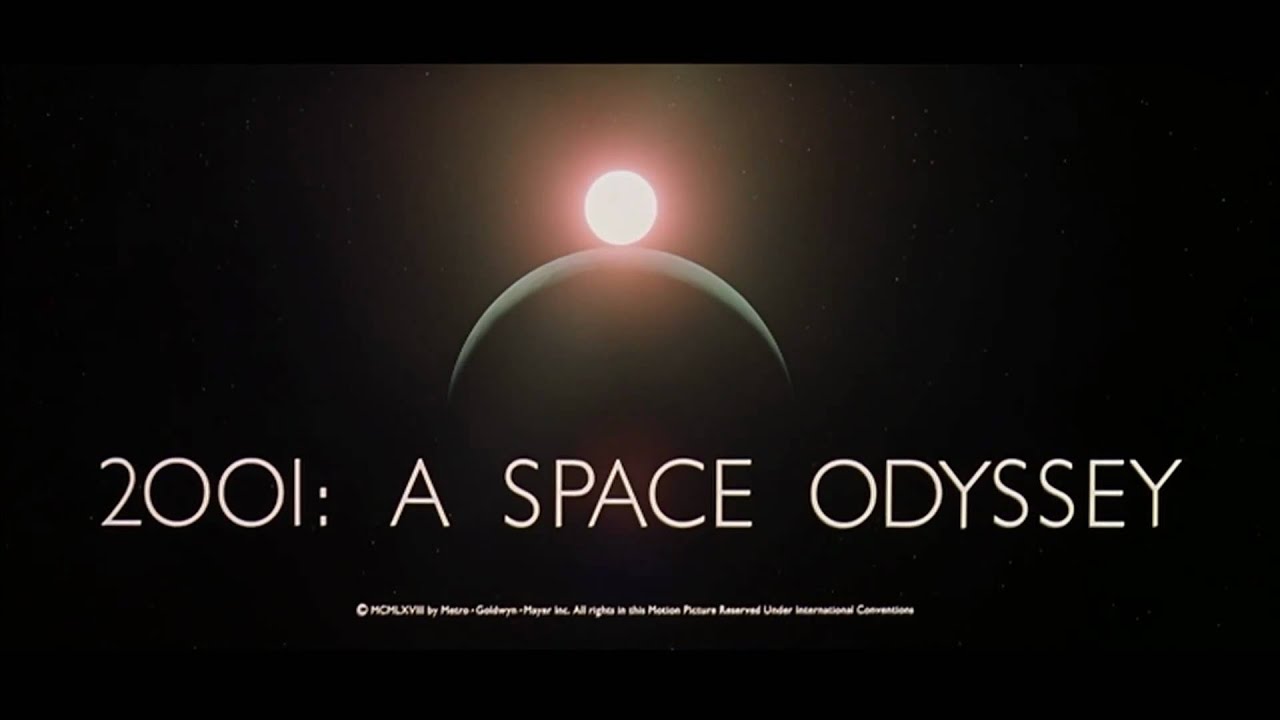
Review #2: 2001: A Space Odyssey


     This is another one of those classic films that you hear references for and see parodies of long before you see it, and another movie I was glad to cross off of my list. 
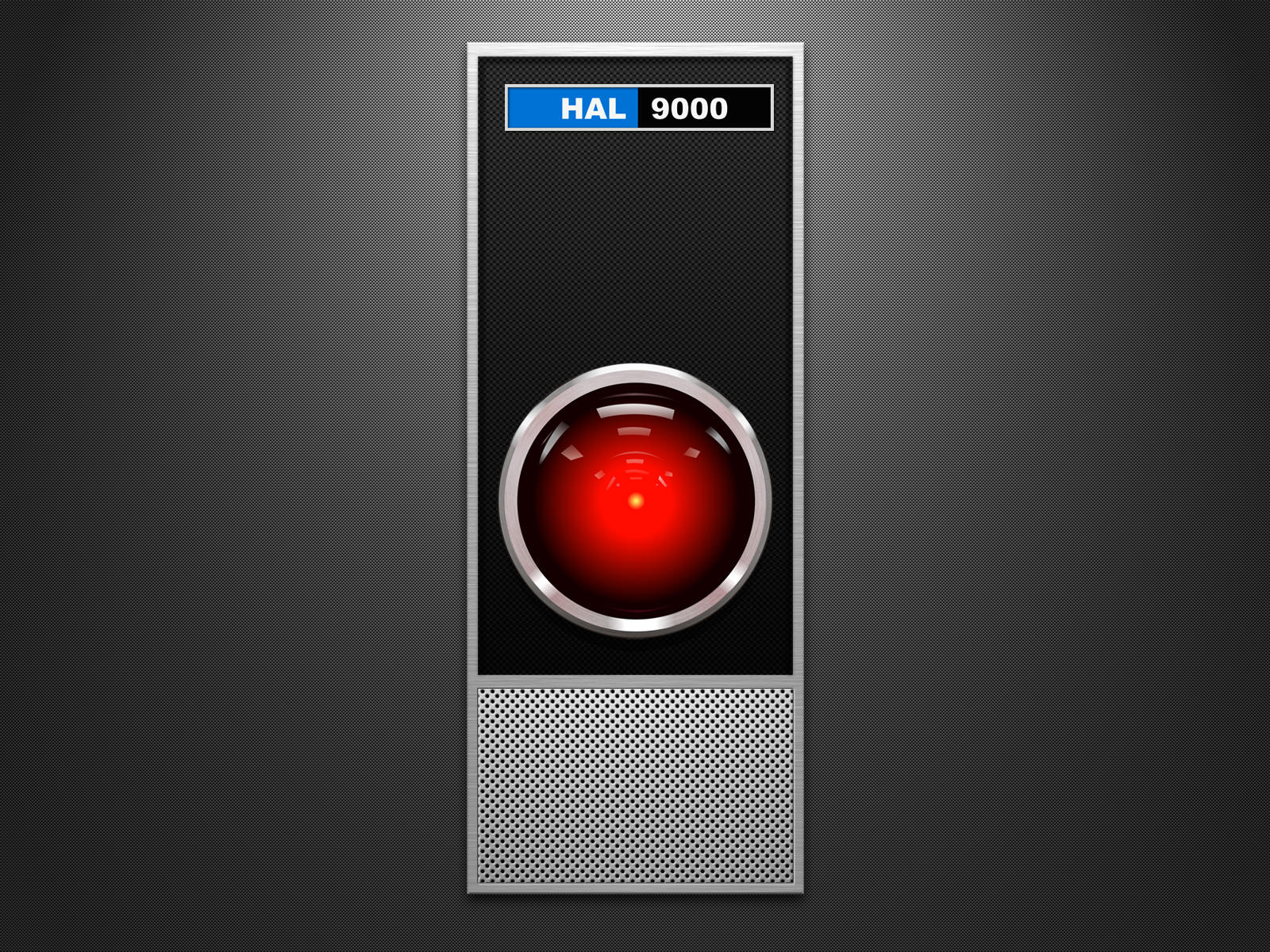
This is the bad guy, I knew that much

     No matter how much people insisted how fantastic this film is-*cough* Edwards *cough*- I never got around to watching it, but that doesn't mean I didn't enjoy it once I finally saw it. I loved this film, in fact. I thought it was great, with cool practical effects for even today, that only impressed me more when I saw them on exhibit in Toronto. The minimal dialogue and tons of ambient noise really added to the weight of the scenes and kept my eyes on the screen the whole way through. As much as I enjoyed the movie, I can why others might not enjoy it as much as I did. All that silence and ambient sound I mentioned earlier? Some may not appreciate what that adds to the atmosphere of the movie and clocking in at a nearly three hour run time is bound to make some less patient viewers lose interest. 
They might find the space shots pretty, at least.
     Basically, I really loved this movie, and I know why it's considered a must see for sci-fi fans. But, I can also see why this film would just put other people to sleep for three hours.


Review #3: The Truman Show


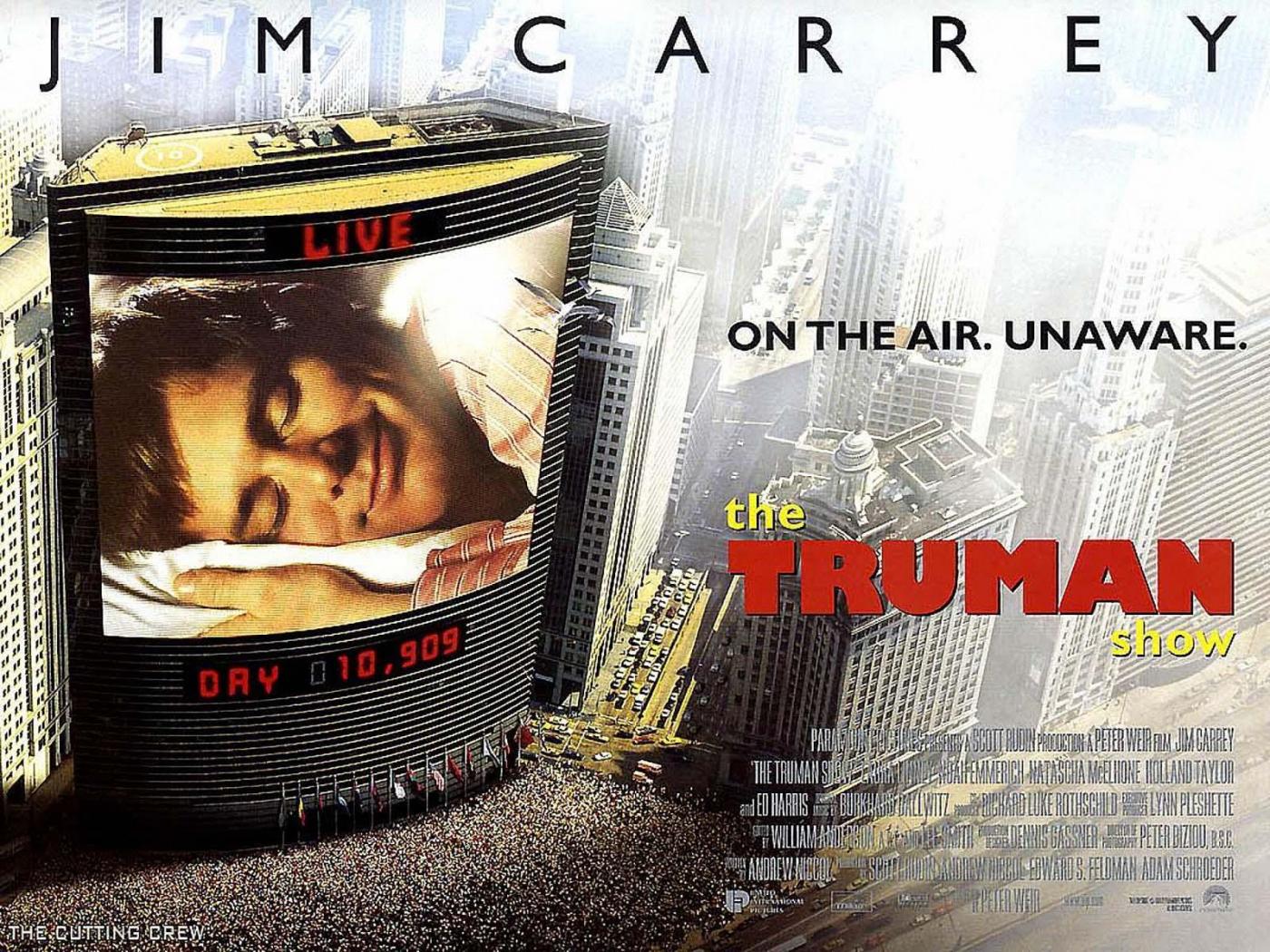
     The Truman Show is and always has been, hands down, one of my favourite Jim Carrey movies. It's a movie that steps just outside the wacky comedy and crazy facial expressions of most of Jim Carrey's movies and still keeps you interested. I really loved the premise of this movie. I thought the idea of someone discovering that there entire life was nothing more than a show being broadcast all over the world interesting and intensely surreal. I also loved how, towards the end, they seemed to ask if freedom at the risk of unhappiness is better than having almost anything you could ever want at the cost of said freedom. The town Truman lives in, Seahaven is really well constructed, showing exactly how much work the people put into the show when Truman's antics start to cause things to fall apart. The Truman Show has an interesting plot that I really loved, was a change from most of Jim Carrey's movies and has a permanent place in my film collection.


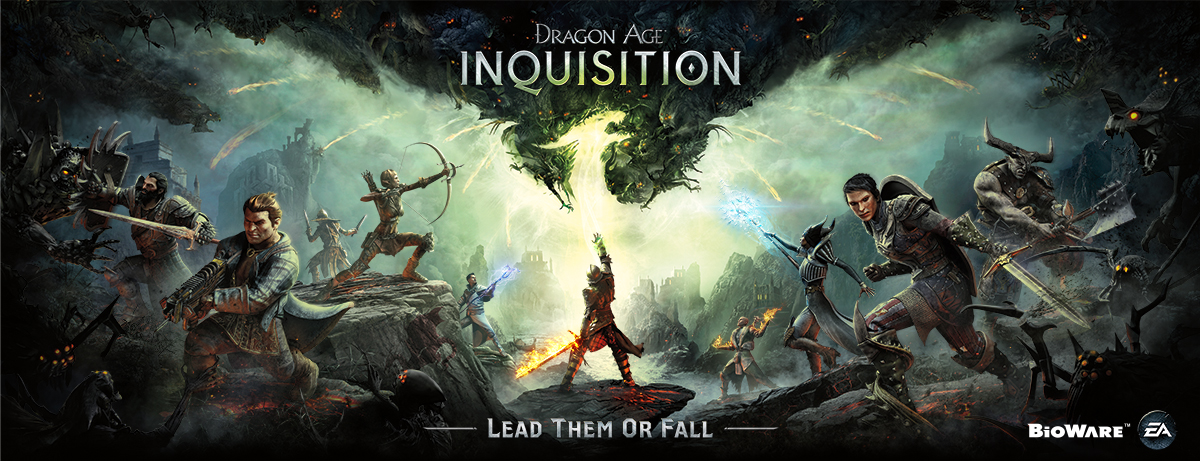
Review #4: Dragon Age: Inquisition


     These are the times when I'm grateful for modern technology like blogs, because at this point, blogs are the only places I can go to talk about Dragon Age: Inquisition without someone telling me to shut the hell up. Needless to say, I really really love this game. It's by far my favourite of the trilogy and a brilliant comeback from the less than stellar Dragon Age 2. It takes the best and most iconic elements of the game like the combat, the rich story and the interactions with your party and expands and adds to them, making them better than before. With the help of a new game engine it boasts new and diverse areas to explore all over the fictional world of Thedas. 
I tune out everything else when I'm playing the Emerald Graves
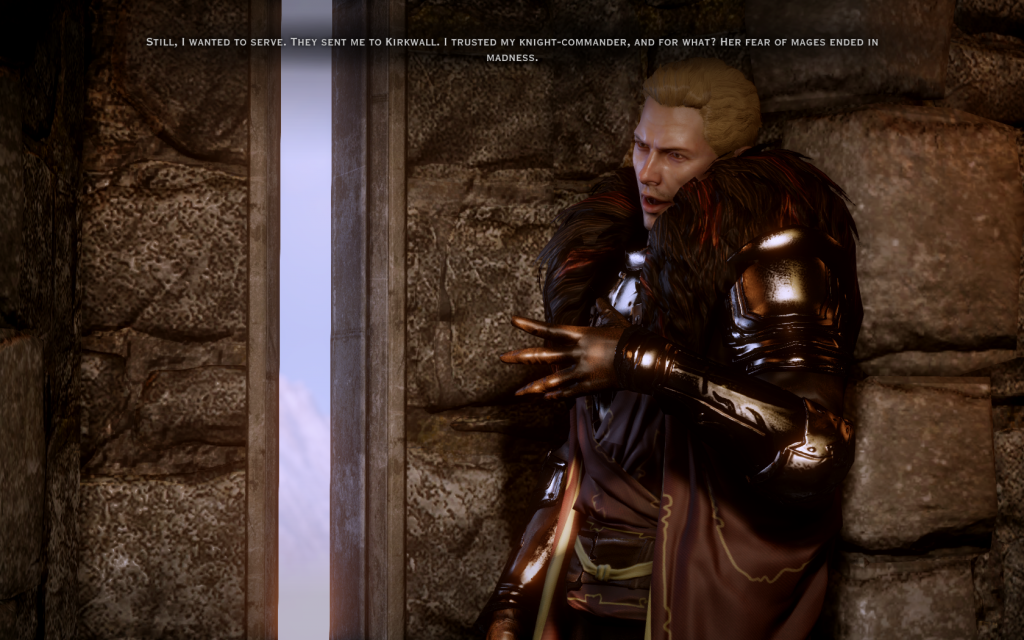
     The game brings in tons of character, both new and old, that can be talked to, allied with or killed if that's what you're into. All that being said, I'll be one of the first to admit that Inquisition has it's faults. Some of the quests can feel repetitive or like fetch quests, but those are staples of the RPG genre. Also, while the graphics have improved exponentially from the first game and the new environments look beautiful comparatively, they could still use some work. There's often some weird looking pop-ins in the environment and the characters faces...well...sometimes they look like they're covered in butter. 

     Looking past those issues, Dragon Age: Inquisition a great game with lots to do in its 100+ hours and multiplayer and even more for loyal fans of the series. 10/10, would recommend.


Tuesday, 25 November 2014

Hella Bella Metafiction

     Some of my favourite shows and movies are genre-bending and play with aspects of meta fiction. They're the kind of shows that step outside of the normal conventions of their genre and aren't afraid to laugh at themselves and acknowledge the flaws of their genre. One of my favorite examples of this is the NBC show Community. 

     Community is a fantastically genre-bending show that constantly steps outside the normal conventions of sit-coms. While one episode could focus on the group attempting to study for a Spanish exam the next could turn into a full-blown cop drama, taking on and making fun of all the tropes of the shows, even changing their opening credits and the show's atmosphere itself. It does this not just for crime shows, but also for Spaghetti Westerns, claymation Christmas films, zombie films and even Star Wars (but who hasn't done one of those?).
     All of this is also done with a healthy dose of meta comedy that the show is iconic for. This is done mostly through the character Abed Nadir, one of the members of the main group, known as the "Greendale Seven". He often communicates with others socially through pop culture references often talking about what they would do if they were actually all on a television show and speculating whether or not they are. This allows the writers to spray pop culture and meta humour jokes all over
Abed. Literally a human meta joke.
the screen to their hearts content. Abed even creates a show about himself and his friends that seemingly predicts the future because of Abed's ability to view their patterns and apply them with television tropes. One very large example of his and the show in general's love of meta humour is one episode in particular that focuses on Abed as he makes a movie about Jesus, which quickly derails as it becomes a film about film-making where god is the camera and the film-maker is Jesus, The episode continues to expand out until it's just one big meta joke, showcasing the writer's love for these jokes and foreshadowing a lot of the humour in later episodes.

     Overall, Community is a wonderful show that loves to laugh at itself and put cracks in the boundaries of what's expected of a genre and if I was trying to explain the concept of meta fiction to someone, I'd hand them a DVD of this show. It's one of the only shows I care to keep up with regularly because of it's originality, wit, self-referential humour and heart.
#sixseasonsandamovie


Wednesday, 1 October 2014

Music Video Analysis: The Lonely Island

     Music, along with books and television are is one of the most common and accessible forms of media and one of the biggest staples when it comes to music is the videos. Music videos were once almost as important to music as the artists themselves. They promote the band and help illustrate the song's message while providing a new dimension to the song.

Yeah, these guys
     One of my favourite musical groups is The Lonely Island, a musical comedy group formed by Akiva Schaffer, Jorma Taccone and SNL's Andy Samberg. Their song Spring Break Anthem is a particular favourite of mine because it showcases their hilarious sense of humor as well making a fair point about what is socially accepted these days. The video shows college guys on spring break doing stereotypical, awful spring break guy things inter-cut with shots of them planning a wedding and getting married to other men. The whole video combines together with the song to show how ridiculous it is that the things people do on spring break is accepted while gay marriage is seen as weird or crazy by many people still.


Construction of Reality

     The reality portrayed in this video is fairly similar to that of their other videos, but sticks a little closer to our reality then most of their songs. It slightly exaggerates the behavior of college students over spring break, unfortunately not enough to make the fact that behavior like this is considered normal less depressing. The video is made this way to visually promote how ridiculous behavior like this is while entertaining the audience. The song is also made this way to sound like one of the songs you'd typically hear at a spring break party. Overall, the video fits well with the rest of The Lonely Island's songs and adds quite a bit to the song itself.

Codes and Conventions

     I love this song because it is full of stereotypes about party music and college students on spring break but it uses them in a way that doesn't just make fun of them, but uses them to make a valid point. The song screams typical crazy party music, young people drinking and partying, half naked girls and general awful people party activities. It combines this with an incredibly stereotypical portrayal of  students partying over spring break doing all these crazy, drunken and incredibly awful things. The stereotypes are used as a large part of the video to get the message across. 
     
Creeds and Values

     The most prominent value expressed in this song is how ridiculous it is that, while the crazy, terrible things college students do while partying over spring break is considered normal the concept of gay men wanting to have the right to get married is seen as insane by so many people. While portraying college students as irresponsible and awful who get away with doing awful things over vacation, gay men are portrayed as generally normal; doing things any couple would do when planning a wedding. The video makes fun of the people who do this ridiculous partying and supports homosexuals who want to get married and want to care about each other and have rights like everybody else. http://pitchfork.com/features/interviews/9143-the-lonely-island/


Commercial

     The video for Spring Break Anthem is a very effective way to promote not only the song, but the entire Wack album itself. The video is not only funny, but it also premiered on Zach Galifinakis's show Between Two Ferns and starred him and James Franco along with The Lonely Island. The song is aimed at young adults and fans of musical comedy and it hits it right on the mark by using well known guest stars and using a video that looks a lot like a lot of modern party music. The song itself doesn't work as well without the video and it helps bring the admittedly not subtle message of the song together to make an incredibly entertaining song.  

     While the point of videos are definitely to promote the band and their albums to some extent but this is one of the few videos I have seen lately that doesn't seem as commercial and try-hard-ish. The video is funny and entertaining and promotes a really positive message and is overall a very awesome video.


Thursday, 18 September 2014

Media and Me: Where We Stand

     As much people may complain about today's media, I don't find it as awful as some do, in fact, I see it as quite important in my life. I not only use media to stay connected to the rest of the world every day, but I also use it as a tool to help with my school work, as a creative and emotional outlet and, for most of my life, something I can use as a basis too help define myself and who I want to be. 
    The internet keeps me connected to everyone I know as well as a large chunk of humanity's collective knowledge (plus more pictures of cats doing weird things than any sane person needs...). Thanks to this, I can use social media sites like Facebook to get help with homework from classmates, connect and catch up with relatives and friends I may not have seen in a while, or just watch a video of strangers slapping each other in the face (The Slap).
     I also use media like books, and music as an emotional and creative outlet. When I'm frustrated, for instance, I listen to certain kinds of music to channel the anger and keep me occupied until it goes away or when I want to relieve stress I read a book and escape into the world of that story for a while.
    Media can also show me views and perspectives I've never seen before that can shape and effect my own views and perspectives. Even prominent people within the media can become role models that inspire me and help shape who I am and who I want to be some day. Overall, media is a fairly significant part of my life.
Me, in a nutshell
     While media as a whole is important to me, there are certain aspects of the media that effect me more than others, particularly books, music and television. 
     Books and reading always have been and always will be a huge part of my life. I've been reading for as long as I can remember and often preferred to read over other things growing up.
     After being introduced to the series through the movies, I started reading the Harry Potter series and it started a years-long love of the series. For years, all I talked about was Harry Potter. I even dressed up as Harry Potter every Halloween for years (sorry, no pictures...). Soon that love expanded out from just Harry Potter to books in general. 
     I love books because while the author writes the story, it's really left up to the reader to interpret what the author wrote to bring it alive. This makes the world infinitely larger and a different experience for every reader. 
A quote from one of my favourite books, Cloud Atlas
     Music is one of the most common and most popular forms of media. I'm passionate about music in particular because it's such an accessible, diverse and common form of media.
     While many people have a favourite genre, I don't have any specific favourite. You would be hard pressed to find a genre that didn't have at least one song I enjoy because I love all the different kinds of sounds and styles and content that both modern and classic music offers, from indie to rock to classical.
     Music also helps me think and helps my ideas flow better when I play it while I'm working. It calms me and steadies my mind and helps me focus on my work, I honestly can't imagine working without it.
     I listen to music whenever my ears are not otherwise engaged and the first thing I grab before leaving the house is my IPod. I think it's safe to say that music is a rather large part of my life. 

                                           Pillow Talk-Wild Child


                    Moonlight - Electric Cello-Beethoven/The Piano Guys


     Television is another branch of media that has a rather significant impact on my life. These days I've started to watch it less and less, but it doesn't diminish the effect it has on me.
     When I was a really young child television was one of the few ways I could connect in anyway with my brothers that didn't involve physical violence. One of the only times my brothers and I ever spent time together without fighting was when we sat together to watch cartoons on Saturday mornings.


One of our favourite shows to watch together

     As I've gotten older, I've stopped watching television as often as I used to, but it hasn't made it any less important to me. 
    Of the few shows I still regularly watch the one that has the most impact on me is Doctor Who. The show has been one of my favourite things to watch for the past couple of years. I find the show exciting and interesting and the story incredibly original. The characters are interesting and well developed and clever. Plus, the characters have qualities and skills that I can aspire to have as well, more so than thoseof some of the real people others look up to. 


My role model(s)
     I also love Doctor Who and shows like it because it brings people together. People bond over their mutual love of these shows and characters and collectively make the show better by adding their own content and theories to the mix.

    
   Talking about today's popular culture is a much more difficult task than it was 10 years ago. This is because it has become a far broader term thanks to our little friend, the internet. Popular culture isn't just what you see when you turn on your TV or read a magazine from the store anymore. It's what you see when you open your computer or check your newsfeed or read a text on your phone and there are so many groups and cliques and styles now that popular culture can't really be defined as a few certain trends.
    That said, that doesn't mean I like all aspects of popular culture- but that also doesn't mean I hate it all either. What I hate, are the parts of modern popular culture that suggest that the sluttier and less resposible you are, the more popular you'll be and the more fun you'll have. While I realize that some statistics related to that (i.e. teen pregnancy) have actually lowered since the days of our parents' teen years, I still don't enjoy how much more frequently it's presented to people my age as if it should be the norm. I know kids who barely even understand what sex is who idolize people like this:

    I mentioned previously that I love the fans and fandoms of shows like Doctor Who because it brings people together in great ways, but there's also a flip-side to that coin. While most people involved in these fandoms are perfectly fine people who just generally enjoy something and like being a part of a group because of it, some people make the others bad by being violent and hateful of anyone who attacks the thing they love. 
   A good example of this can be seen on the internet in the form of a youtuber named Pewdiepie who makes video game Let's Plays. Now, personally, I am not a fan of the man's videos. I don't find them funny and I'm not sure if they really should be referred to as Let's Plays, but that doesn't mean I hate the man himself. I don't deny that the man seems like he is generally a really good guy, I just have little regard for his videos. My biggest problem is not actually with Pewdiepie himself, but with his fans. While many of his fans (referred to as Bros) are perfectly fine people, there is a select number of them are defensive and quite violent. They call themselves the Bro Army and have been known to threaten and harass people who speak ill of "Pewds". I've seen more that one occasion where people insult him or his videos and his fans don't hesitate to jump on said person and threaten them to the point where it can get genuinely terrifying.
I couldn't find any screenshots of comments or tweets to
 go with this, so here's another picture from Jackie Chan Adventures
    There are still many parts of popular culture I love. I love the increased message of general acceptance for all people that is appearing in everything from books to television to movies more and more frequently, even if at times it feels mildly forced. I am also a fan of the idea that it can be cool to be nerdy or that it's "Hip to be Square" it makes me feel as though in the near future, people won't have to be stressed about being judged because they're gay or transgender or just generally different. Plus, I love how these days, popular culture has expanded to such a massive size that there really is something for everyone to connect with if you look hard enough. 
    
    As for today's media and technology, I find it both useful and harmful at times. Like any other tool, it's only as harmful or helpful as the people who use it. For example, I love the communication aspect of social media sites like Facebook and Twitter that allows people to keep in touch easily with others. For example, us Laurier students at BCI use a page on Facebook to talk about homework and exams and get any help they need. 
 
    Although, we mostly just use it to see who's lazier and talk about how much we hate the prospect of work.

    I also use the internet to play games and do online shopping. I prefer this method to buying things in person at times because although you may not get it right away, it is often more convenient, easier to find what you're looking for and most times cheaper.

    I've mentioned previously that I'm particularly passionate about music, books and television as branches of media, but there is one other that has struck a chord with me since I was very young, and that is video games. 
People found this really hot somehow...
    Video games have been a part of my life for as long as I can remember. Some of my earliest memories of spending time with my brothers involve us playing games or watching them play games like the original Mario or the first, blocky Tomb Raider game with too few polygons. To this day I still play video games often and have only become more fascinated with them as the years go on.

    
    I love video games because, to me, they are one of, if not the, ultimate art form. Video games, particularly newer games combine the best parts of  other media forms. They have amazing soundtracks by fantastic composers that help you lose yourself in the world of the game. Storytelling is also becoming an important part of games now. Many games have in depth stories that would work as full novels but with the added benefit of the player having an impact on how the story plays out and they are allowed to choose how much lore and exposition they receive through their in-game interactions. The graphics in games are also getting better and better as time goes on to the point where even worlds created in these games like Skyrim in Elder Scrolls V could be considered art on their own.

    One of the things I love most about games though is that it is one of the most involved forms of media out there. You can listen to and connect with a song, but that's all it will ever be, you can't be anymore involved with the song as you're listening to it. You can read a book and imagine the world it's set in, you can only explore it as far as the information in the book combined with your imagination lets you, and your opinions and choices can't change the outcome of the story. In video games you can do all that and much more. 

    One of my favourite game series, The Mass Effect Trilogy, has a universe created through pages and pages of lore, but you don't have to read it if you don't want to. Throughout all three games you play as a commander in humanity's space naval division on a race against time to stop an ancient race of sentient machines from ritualistically wiping out the entire galaxy. Through the entire game you're forced to make decisions that not only shape and affect your character, but the entire galaxy around you. You form relationships with members of your team and most importantly, the decisions you make carry over from one game to the next, making you really feel as if the safety of the galaxy is in your hands. The whole game comes together with a beautiful soundtrack and a well developed story (Well, right up to the AI-ghost-kid thing...) and a beautifully crafted world to make an incredibly engaging experience.
Yeah, this bit was kinda... weird

    Many people see games as little more than dumb distractions for kids and losers but looking at games closer up can show you that games can be much deeper than that. While some games are just for fun and have no deeper meaning than to just shoot a bunch of aliens until they explode to get points others do have far deeper meanings and are far more artistic. Nowadays people use games to state a message or to strike a chord with their players and get them really invested in the story/world they have created. They use them to show of their art by designing worlds that people can get invested enough in to spend hours with. It games like these that impact me, make me think and bring me closer to my friends with the interactivity and prove to me that not all video games are glorified toys.

    ...But then again, sometimes, shooting aliens until they explode can be more fun then taking part in an epic fantasy adventure...
Oh yeah, that's what I'm talking about


    So, that's where I stand with media. Overall, I enjoy media and today's popular culture, but sometimes I think they should give some things a bit of a rest. 


Here's some cool stuff you can check out if you're bored:
Steve Lichman: http://tapastic.com/episode/44180
Broodhollow: http://broodhollow.chainsawsuit.com/chapters/

And here's one more Jackie Chan Adventures picture for the road: